Casanova’s Chinese Restaurant opens with a scene of Nick standing in the bombed-out remnants of the Mortimer. As he stands there, a crippled woman comes down the road outside, singing,
“Pale hands I loved beside the Shalimar,
Where are you now? Who lies beneath your spell?”
This couplet, which is the opening for “A Kashmiri Love Song,” triggers Nick’s memory of a night he spent with Moreland discussing “A Kashmiri Love Song.” This memory then inspires Nick to recount all the events of CCR, in what amounts to a two hundred and fifty-page long tangent. However, there is a significant enough connection between “A Kashmiri Love Song” and CCR to set off this tangent. In Nick’s first flashback, Moreland is deeply affected by the song and says as much. In fact, this song, and also Moreland’s reaction to it, predicts the themes of CCR and sets into motion almost all the events in the book.
“A Kashmiri Love Song” is, obviously enough, a song about love; in particular it is bout the narrator remembering how much he once loved the owner of the pale hands. However, the song seems to imply that the two are no longer together. The second stanza reads
“Oh, pale dispensers of my Joys and Pains,
Holding the doors of Heaven and of Hell,
How the hot blood rushed wildly through the veins
Beneath your touch, until you waved farewell.”
The narrator loved the pale hands person very deeply, to the point where she controlled the narrator’s happiness, even his life. And then she waved farewell, and even through that loss and that pain the narrator remained transfixed, his love was so strong. The last two lines of the song say,
“I would have rather felt you round my throat,
Crushing out life, than waving me farewell!”
In his desperation, the narrator would rather receive pain from his lover than receive nothing at all.
The song spends a lot of time talking about love lost, especially in the first and third stanzas, where the narrator mourns his current situation. And even the second stanza, which contains the main description of how amazing their love was, ends with “until you waved farewell,” signaling that it is very much over. The entire song, then, refers back to this great love that has consumed the narrator for years and will probably consume him forever. And because of that, it has a sense of bittersweet nostalgia, of remembering that which has been lost forever.
That is the exact word Moreland used to describe the song: “What nostalgia,” he said on page 3. It is that part of the song that struck him the most, how strong the narrator’s yearning for a former love was, even though it had caused him significant pain. That idea had such a profound effect on Moreland that he became “unsettled” and “in the depths of a gloom.”
At the beginning of CCR, Moreland was young and unmarried. The only one of his former relationships we learned about was the waitress, and he did not love her with half the intensity the song’s narrator showed for his mistress. One possibility is that Moreland was depressed by the song because he had never felt an emotion as strong as the one it described, and he wanted to. He had never been in love like the narrator, and that depressed him. It made him want to experience that feeling, no matter what the cost.
After explaining the sadness the song had instilled in him, Moreland said, “Let’s live for the moment.” Moreland decided then and there to find the sort of love described in the song and pursue it, even if it meant the sort of the pain the song’s narrator suffered from. That is what living for the moment meant, that he would search for love and hold onto it as hard as possible. And, actually, Moreland found that love shortly after hearing the song: he found Matilda and married her.
CCR spends a great deal of time talking about marriages, and more generally about relationships of love. There are numerous examples of this, including Nick and Isobel, the Maclinticks, the Morelands, to name a few, and, in the background, there is the matter of the king abdicating his throne to pursue love. And then, one of the final revelations of the book is that Chips Lovell and Priscilla are to be married, in a continuation of this marriage cycle. “A Kashmiri Love Song” is used to explain why Moreland, and by extension, all the other characters, decided to get married: because they wanted to find that deep love, even if it meant losing everything. CCR, then, follows up that idea and shows what happens after the leap is taken, after the characters decide to risk everything and get married. Some of them, like Nick, succeed; others, like Maclintick, suffer the same fate as the song’s narrator; but they all took the same risk that is marriage.


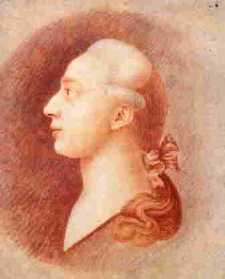 Soldier, spy, diplomat, writer, adventurer, chiefly remembered from his autobiography, which has established his reputation as the most famous erotic hero. Casanova’s memoirs are an unreliable account of his adventures with 122 women – according to his own counts – but they also provide an intimate portrait of the manners and life in the 18th century. His countless projects, employments, and initiatives took him through the courts of Europe – in Paris he was employed to do some espionage work by Louis XV and from London he tried to sell the secret of a cotton red dye to his own country.
 Casanova’s Chinese Restaurant opens after World War II at the bombed-out site of the Mortimer, a pub Jenkins used to go to. Through a series of recollections, we see Jenkins meet Hugh Moreland (left), a composer, in the late 20s. Through Moreland and Mr. Deacon Jenkins meets Maclintick, Carolo, and Gossage, all three associated with music, and Norman Chandler, a dancer. Later in the evening they dine with Barnby. Jumping to the mid-30s, Jenkins attends a play with Moreland and meets his girlfriend, Matilda Wilson, an actress. At the play he meets Mark Members, Stringham’s mother Mrs. Foxe, and Chandler. Finally we learn that Matilda and Moreland marry, about a year before Jenkins and Isobel do.